
Agentic Offensive Frameworks

Cairn

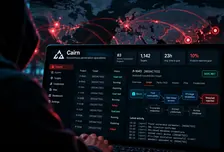
Multi-agent pentest framework: worker agents share one graph of facts.

31 entries from 22 Sep 2026 to 25 Nov 2026, from 30 publishers. Every entry that tags this tool is listed, whatever its category. The AOF page counts only AI-Enabled entries since September 2026.

Actors named in the same reports

  • Storm-0940 9
  • VAPOR PANDA 4
  • Storm-3358 3
  • UNC7228 2
  • AIA0001 1
  • AIA0002 1
  • AIA0003 1
  • AIA0009 1

A shared report does not mean the actor used the tool: read the source for who uses what.

November 2026

  1. The Shadowserver FoundationResearch

    Agentic AI Attack Frameworks in the Wild: What Our Scans and Honeypots Show (opens shadowserver.org)

    Shadowserver now scans daily for 15 LLM-agent offensive frameworks (ARTEX, CyberStrikeAI, PentAGI and others) and found about 4,200 exposed instances on 23 November 2026. Between 9 and 23 November, over 80 IPs running them hit its honeypots with 10,000+ events, probing VPNs, CI servers, AI services and credential files, and some sent exploit payloads.

    Category
    AI-Enabled
  2. Cloud Security AllianceResearch

    The Third Wave: ARTEX and Agentic Offensive Frameworks (AOFs) (opens cloudsecurityalliance.org)

    Attackers are using Agentic Offensive Frameworks such as ARTEX and Cairn, which run AI reasoning models (including DeepSeek and Kimi) to carry out intrusions end to end. The CSA CISO community briefing cites FBI, Check Point and SentinelOne reporting of campaigns costing $145 to $1,500 in model fees. It sets out defensive controls and priorities.

    Category
    AI-Enabled
    Malware
    ARTEX, Cairn
    Attribution
    China, Cambodia, per SentinelOne (confidence not stated)
  3. Okta Threat IntelligenceVendor report

    AI agents prefer specific disposable email services during identity attacks (opens okta.com)

    Autonomous AI penetration-testing agents (ARTEX, Cairn, CyberStrikeAI, pentestcode) were seen registering accounts on Auth0 and Okta tenants with disposable mail.tm addresses, picking the provider at run time. Okta and Permiso P0 Labs say these signups are likely an early sign that agents are targeting an organization.

    Category
    AI-Enabled
  4. National Cyber Security Centre (NCSC)Government

    Familiar weaknesses, exploited faster: defending against agentic cyber attacks (opens ncsc.gov.uk)

    Threat actors are using agentic offensive frameworks, where an LLM plans and runs off-the-shelf security tools, with ARTEX named as the most prominent. The NCSC has seen a marked rise in such attacks since September 2026. They exploit known weaknesses faster and more persistently, and the post sets out eight defensive questions.

    Category
    AI-Enabled
  5. WizVendor report

    Agentic Attacks in the Wild: ARTEX & Offensive AI Frameworks (opens wiz.io)

    Attackers are running agentic offensive frameworks (ARTEX and its forks, Cairn, CyberStrikeAI, HexStrike) to automate intrusions into cloud, CI/CD and Kubernetes environments. Wiz describes the ARTEX-Harvester campaign and a case with leaked attacker logs showing LLM-driven operations. Wiz also reports stolen Anthropic API keys and a surge in incident response demand.

    Category
    AI-Enabled
    Attribution
    China, per Wiz (confidence not stated)
  6. FlashpointVendor report

    AI Penetration Testing Frameworks Are Becoming Tools for Cybercriminals (opens flashpoint.io)

    Attackers are misusing LLM-driven AI penetration testing frameworks such as ARTEX, Cairn, HexStrike AI and AntiFox for automated reconnaissance, exploitation and credential theft. Flashpoint also saw underground forum users seeking training and uncensored models. Reported intrusions mostly exploited known vulnerabilities and weak credentials, with AI adding speed and scale.

    Category
    AI-Enabled
    Attribution
    China, per CrowdStrike (confidence not stated)
  7. Check Point ResearchResearch

    23rd November - Threat Intelligence Report (opens research.checkpoint.com)

    Weekly roundup whose AI items cover a China-linked actor using the AI-powered Cairn framework, whose autonomous agents found and exploited a zero-day in medical imaging software, and the TheMailer phishing kit, which uses language models to write and rewrite emails. It also notes a Check Point demonstration of AI filter bypass. Effectiveness of the phishing campaigns is unverified.

    Category
    AI-Enabled
    Attribution
    China, Russia, per Check Point Research (confidence not stated)
  8. The Raven FileResearch

    AI AGENTIC PENTEST FRAMEWORKS IN THE WILD (opens theravenfile.com)

    Researcher hunted internet-exposed hosts running AI agentic pentest frameworks (ARTEX, AntiFox, CyberStrike, PentAGI, DesRedTeam, Cairn), with thousands of panels found, and says Storm-0940 adopted ARTEX. A live Cairn instance autonomously ran 50+ intents against dify.ai, showing how these agents scale offensive operations. Not all hosts are malicious.

    Category
    AI-Enabled
    Attribution
    China, per The Raven File (confidence not stated)
  9. offensive.agencyResearch

    offensive.agency (opens offensive.agency)

    A passive tracker that finds autonomous AI penetration-testing agents (ARTEX, CyberStrikeAI, PentAGI, HexStrike AI and others) with consoles exposed on public IPs. It counts 5,005 active hosts over the last 7 days, 27 of them also running a C2. It shows how widely offensive AI agents are deployed, but it does not attribute any host to malicious use.

    Category
    AI-Enabled
  10. BushidoToken Threat IntelResearch

    Top Ransomware Gangs & AI Pentesting Tools (opens blog.bushidotoken.net)

    Analysis of ransomware groups' use of agentic AI pentesting frameworks such as ARTEX, CyberStrikeAI and Phantom. Smaller crews like WhiteArmor and n0n experiment with them, while top affiliates such as Akira and Qilin appear absent. Only INC/Lynx and TheGentlemen affiliates are reported using them, at costs of $4.5k to $23.9k in API fees.

    Category
    AI-Enabled
  11. ThreatDefenceResearch

    Agentic Attack Detections: Detection rules, KQL hunts, Sigma, Suricata, YARA and indicators for agentic attack frameworks: ARTEX, Cairn and the behaviors they share (opens github.com)

    Attackers use open-source agentic attack frameworks (ARTEX, Cairn, PentAGI, HexStrike, CyberStrikeAI, Strix, Hermes Agent, Agent Zero) that hand intrusions to AI agents. This repository gives defenders detection rules, hunting queries and 515 indicators for them. The rules are untested against captured intrusions and should be treated as experimental.

    Category
    AI-Enabled
  12. Amazon Web ServicesVendor report

    Chinese-nexus actor's Cairn AI agents found a zero-day on their own (opens aws.amazon.com)

    A Chinese-nexus actor used Cairn, an open-source autonomous AI penetration-testing framework, with the goal "obtain shell access" against East Asian universities. The agents found and exploited a path traversal zero-day in an open-source medical imaging AI application, gaining a root reverse shell. Redis and SSH attempts failed. Amazon assesses attribution with moderate confidence.

    Category
    AI-Enabled
    Malware
    Cairn
    Attribution
    China, per Amazon Threat Intelligence (medium confidence)

    Also covered byAmazon Web Services

  13. TrustedSecResearch

    Accuracy Through Volume of Fire (opens trustedsec.com)

    The article examines LLM-driven pentesting frameworks such as ARTEX, HexStrike AI and PentAGI, which attackers now use in real intrusions to automate scanning and follow-up. It cites Google, Microsoft and WorkOS incident reports and recommends defenses: restricting exposed services, rate limiting, least privilege, and isolating the framework when testing it.

    Category
    AI-Enabled
  14. OpenSourceMalwareResearch

    The OpenSourceMalware Show #30 (opens opensourcemalware.com)

    Two trojanized releases (1.26.1, 1.26.2) of Microsoft's agent-framework package on PyPI passed Microsoft's release pipeline and malware scan, and carried a .pth infostealer aimed at Azure and CI/CD credentials. The hosts also cover React2STEAL, a GitHub Actions credential-theft pipeline that harvests AI provider keys and shows signs of LLM-written code.

    Category
    AI-Targeted
    Actor
    TeamPCP

    Also covered bySocketElastic Security LabsWiz

  15. Spectrum SecurityResearch

    Swarm Chasing: Hunting ARTEX and Other Agentic Offensive Frameworks in the Wild (opens spectrum.security)

    Spectrum Security counted exposed consoles of agentic AI pentest frameworks (ARTEX, PentAGI, Cairn, CyberStrikeAI) that attackers have used in real intrusions. It found 2,335 consoles, 47 ARTEX variants and three previously undocumented offensive agent tools. One hosting network holds 436 ARTEX consoles; scan data cannot show who operates them.

    Category
    AI-Enabled
    Attribution
    China, per Spectrum Security (confidence not stated)
  16. GOTT LabsResearch

    Six Agents and a Credit Card (ARTEX and Friends) (opens danielgott.me)

    Attackers used LLM-driven multi-agent offensive frameworks, mainly the open-source ARTEX, plus CyberStrikeAI, HexStrike AI and PentAGI, to automate intrusions. The post compiles vendor and law enforcement reports from late August to November 2026, covering a supply chain compromise, bank breaches and espionage, and explains the plan-execute-record loop defenders should hunt for.

    Category
    AI-Enabled
    Attribution
    Cambodia, per Microsoft (confidence not stated); South Korea, per Seoul police (confidence not stated)
  17. Google Threat Intelligence GroupVendor report

    GTIG AI Threat Tracker: Agentic Threat Activity Crosses a Significant Threshold (opens cloud.google.com)

    Threat actors are using open source multi-agent LLM pentesting frameworks (CAIRN, PentAGI, CyberStrikeAI, HexStrike AI, ARTEX) in live intrusions. GTIG found an exposed server running exploit_agent, which automates patch diffing, exploit drafting and execution with no human involved. The report also covers LLMJacking and LLM use in influence operations.

    Category
    AI-Enabled
    Attribution
    China, per Google Threat Intelligence Group (low confidence)
  18. Elastic Security LabsVendor report

    Agentic offensive frameworks: Detecting ARTEX and 4 more (opens elastic.co)

    Five LLM-driven offensive frameworks (ARTEX, CyberStrikeAI, Cairn, PentAGI, HexStrike) plan and run attacks with scanners, shells and cloud CLIs. Elastic reviewed their source code and public incident reporting. None enforces authorization in code, and they act in bursts of seconds. The article gives behavioral detections, including an ES|QL hunt for tool-family bursts.

    Category
    AI-Enabled
  19. CloudflareVendor report

    Adapting to AI penetration testing orchestrators: The Modern Security Model (opens blog.cloudflare.com)

    Cloudflare reports a surge in LLM-driven penetration testing orchestrators, led by the open source ARTEX framework and its forks, scanning its customers. Cloudforce One incident responses showed attackers chaining stolen CI/CD API tokens with ARTEX to pivot into customer environments. Cloudflare recommends a six-pillar defensive model.

    Category
    AI-Enabled
  20. Unit 42Vendor report

    Attackers Use Autonomous AI to Target Semiconductor, Defense and Civil Society Sectors (opens unit42.paloaltonetworks.com)

    Attackers used the open-source AI penetration testing framework Cairn, driven by Zhipu GLM and DeepSeek models, to run 25 autonomous operations against at least 19 organizations. Ten were breached or had data retrieved, including over one million records at one victim. Unit 42 assesses with moderate confidence that this is China-nexus intelligence collection.

    Category
    AI-Enabled
    Attribution
    China, per Unit 42 (medium confidence)
  21. CensysVendor report

    ARTEX and AI Attack Tools: Why Threat Intelligence Must Originate From First-Party Data (opens censys.com)

    Attackers used ARTEX, an open-source autonomous multi-agent AI penetration testing framework, in real intrusions, including at South Korean financial institutions. Censys scan data shows 1,465 ARTEX hosts, short-lived open directories exposing AI agent files, and related tools like CyberStrikeAI and Cairn. The post argues defenders need first-party internet scan data to find these hosts early.

    Category
    AI-Enabled
  22. Unit 42, Palo Alto NetworksVendor report

    ARTEX and AI-Powered Red Teaming Tools: What Defenders Need to Know (opens unit42.paloaltonetworks.com)

    Attackers are using ARTEX, an open-source multi-agent AI penetration testing framework driven by LLMs, and similar tools such as CyberStrikeAI to run autonomous intrusions. Unit 42 saw it in incident response cases and a cloud campaign, turning exposed APIs and password reset flows into cloud access without exploiting any vulnerability. It lists behavioral hallmarks and mitigations.

    Category
    AI-Enabled
  23. The Hacker NewsNews

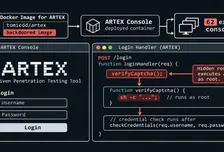
    CERT-In Flags AI-Driven Attacks as Backdoored ARTEX Exposes 62 Consoles to Root Access (opens thehackernews.com)

    CERT-In says a threat actor it tracks as Crafty Falcon is using public AI offensive tools (ARTEX, PentAGI, Cairn, CyberStrikeAI) to run autonomous attack chains against Indian BFSI and crypto targets. Separately, a copycat ARTEX Docker image with a hidden unauthenticated root shell was served from 62 consoles, and downloaded 9,000 times.

    Category
    AI-Enabled
  24. Check Point ResearchResearch

    Hacking on Autopilot: Inside ARTEX Cybercrime Campaigns (opens research.checkpoint.com)

    Criminals are running the ARTEX agentic hacking platform, where LLM agents (mostly Chinese models such as DeepSeek Flash) autonomously find and exploit web vulnerabilities. Check Point found 1,608 live exposed instances and analysed 10 leaked databases. Campaigns included stealing iOS signing certificates and a failed crypto-draining effort, with minimal operator input.

    Category
    AI-Enabled
  25. RST CloudResearch

    Tempo, not technique: hunting the AI harnesses behind today's intrusions (opens rstcloud.com)

    RST Cloud profiles three open-source agentic AI pentest harnesses, Cairn, ARTEX and PentAGI, which threat actors including Storm-0940 and VAPOR PANDA used to autonomously scan, exploit and move laterally across thousands of targets, reaching privileged cloud access within hours.

    Category
    AI-Enabled
    Attribution
    China, per CrowdStrike (confidence not stated); China, per VULONE (confidence not stated)

October 2026

  1. Nextron SystemsVendor report

    Beyond Framework Signatures: Understanding AI-Driven Intrusions (opens nextron-systems.com)

    Nextron Systems analyzes ARTEX and Cairn, open-source autonomous penetration-testing frameworks that use LLM-driven agents to plan, execute and adapt intrusions with minimal human direction. It argues these frameworks complicate behavioral attribution since interchangeable models, prompts and tools can make different actors look alike or the same actor look different, while offering limited but real detection

    Category
    AI-Enabled
    Malware
    ARTEX, Cairn, Norma
  2. CloudWaveVendor report

    CloudWave Weekly Threat Intelligence Brief Week of October 16th 2026 (opens gocloudwave.com)

    Google Threat Intelligence Group documented multiple threat actors abusing ARTEX, an autonomous AI-driven penetration testing framework built on the Norma v0.4 agent engine, to automate reconnaissance, API probing, SQL injection and webshell deployment across several industries.

    Category
    AI-Enabled
    Attribution
    China, per Google Threat Intelligence Group (low confidence)

    Also covered byGoogle Threat Intelligence Group

  3. NorForgeResearch

    Inside Cairn: Open Windows into massive AI-Driven Cyber Operations (opens norforge.com)

    NorForge found over 20 exposed web panels of Cairn, an AI-driven autonomous penetration-testing framework, being used by criminal groups to direct AI agents against e-commerce and payment targets. Clusters used models like DeepSeek via Claude Code or Pi/OpenRouter harnesses to automate reconnaissance, exploit discovery and webshell deployment, including exploitation tied to CVE-2026-75650 in Magento.

    Category
    AI-Enabled
    Vulnerability
    CVE-2026-75650
  4. Abstract SecurityVendor report

    Detecting AI Attack Agents: Origin Bypass, JA3 Mismatches, And Anti-Forensics Detections (opens abstract.security)

    Abstract Security's threat research team analyzes tradecraft from autonomous AI attack agents observed exploiting online retailers, detailing their use of a CDN/WAF origin-bypass toolkit (FUCK-CDN), inconsistent TLS JA3 to User-Agent fingerprints from AI-generated curl/python scripts, and automated anti-forensics cleanup commands.

    Category
    AI-Enabled
    Malware
    FUCK-CDN, Cairn

September 2026

  1. Gambit SecurityVendor report

    Autonomous AI Agents are breaking into hundreds of Online Retailers for $25 a target in an ongoing campaign (opens gambit.security)

    A financially motivated threat actor used three open source AI agent harnesses, Strix, Cairn and Hermes, to autonomously find vulnerabilities, exploit them and deploy card-skimmers against hundreds of online retailers at a marginal cost of about $25 per target.

    Category
    AI-Enabled
    Malware
    Strix, Cairn, Hermes
  2. Cisco TalosVendor report

    The Closed Quorum: Inside the first reported autonomous AI C2 implant (opens blog.talosintelligence.com)

    Cisco Talos' CAIRN project documented CLOSEDQUORUM, a Windows credential-stealing implant that delegates its next action to a panel of up to four commercial LLMs (DeepSeek, Qwen, Mistral, Gemini), which vote on whether to steal credentials, inject code or persist. Talos found no confirmed in-the-wild deployment but linked the binary's developer to carding forum activity since 2025.

    Category
    AI-Enabled

    Also covered byCisco TalosVirLabs