
Agentic Offensive Frameworks

CyberStrikeAI

LLM orchestrator with a built-in command-and-control server.

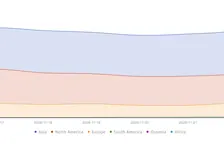
21 entries from 20 Feb 2026 to 25 Nov 2026, from 19 publishers. Every entry that tags this tool is listed, whatever its category. The AOF page counts only AI-Enabled entries since September 2026.

Actors named in the same reports

  • Storm-0940 8
  • VAPOR PANDA 3
  • Storm-3358 2
  • Akira 1
  • ARTEX-Harvester 1
  • Autumn-27 1
  • Crafty Falcon 1
  • Ed1s0nZ 1

A shared report does not mean the actor used the tool: read the source for who uses what.

November 2026

  1. The Shadowserver FoundationResearch

    Agentic AI Attack Frameworks in the Wild: What Our Scans and Honeypots Show (opens shadowserver.org)

    Shadowserver now scans daily for 15 LLM-agent offensive frameworks (ARTEX, CyberStrikeAI, PentAGI and others) and found about 4,200 exposed instances on 23 November 2026. Between 9 and 23 November, over 80 IPs running them hit its honeypots with 10,000+ events, probing VPNs, CI servers, AI services and credential files, and some sent exploit payloads.

    Category
    AI-Enabled
  2. Okta Threat IntelligenceVendor report

    AI agents prefer specific disposable email services during identity attacks (opens okta.com)

    Autonomous AI penetration-testing agents (ARTEX, Cairn, CyberStrikeAI, pentestcode) were seen registering accounts on Auth0 and Okta tenants with disposable mail.tm addresses, picking the provider at run time. Okta and Permiso P0 Labs say these signups are likely an early sign that agents are targeting an organization.

    Category
    AI-Enabled
  3. WizVendor report

    Agentic Attacks in the Wild: ARTEX & Offensive AI Frameworks (opens wiz.io)

    Attackers are running agentic offensive frameworks (ARTEX and its forks, Cairn, CyberStrikeAI, HexStrike) to automate intrusions into cloud, CI/CD and Kubernetes environments. Wiz describes the ARTEX-Harvester campaign and a case with leaked attacker logs showing LLM-driven operations. Wiz also reports stolen Anthropic API keys and a surge in incident response demand.

    Category
    AI-Enabled
    Attribution
    China, per Wiz (confidence not stated)
  4. InfrawatchVendor report

    Autonomous Offensive Frameworks: 128 AI Attacks (opens infrawatch.com)

    Infrawatch analysed 128 intrusions run by Autonomous Offensive Frameworks, LLM-driven attack agents such as ARTEX, and tracked 8,105 hosting servers. Agents ran most intrusions, using models like DeepSeek and Claude, with a roughly even success rate (22 succeeded, 23 failed). Because the infrastructure is observable, defenders can block it.

    Category
    AI-Enabled
  5. FlashpointVendor report

    AI Penetration Testing Frameworks Are Becoming Tools for Cybercriminals (opens flashpoint.io)

    Attackers are misusing LLM-driven AI penetration testing frameworks such as ARTEX, Cairn, HexStrike AI and AntiFox for automated reconnaissance, exploitation and credential theft. Flashpoint also saw underground forum users seeking training and uncensored models. Reported intrusions mostly exploited known vulnerabilities and weak credentials, with AI adding speed and scale.

    Category
    AI-Enabled
    Attribution
    China, per CrowdStrike (confidence not stated)
  6. The Raven FileResearch

    AI AGENTIC PENTEST FRAMEWORKS IN THE WILD (opens theravenfile.com)

    Researcher hunted internet-exposed hosts running AI agentic pentest frameworks (ARTEX, AntiFox, CyberStrike, PentAGI, DesRedTeam, Cairn), with thousands of panels found, and says Storm-0940 adopted ARTEX. A live Cairn instance autonomously ran 50+ intents against dify.ai, showing how these agents scale offensive operations. Not all hosts are malicious.

    Category
    AI-Enabled
    Attribution
    China, per The Raven File (confidence not stated)
  7. offensive.agencyResearch

    offensive.agency (opens offensive.agency)

    A passive tracker that finds autonomous AI penetration-testing agents (ARTEX, CyberStrikeAI, PentAGI, HexStrike AI and others) with consoles exposed on public IPs. It counts 5,005 active hosts over the last 7 days, 27 of them also running a C2. It shows how widely offensive AI agents are deployed, but it does not attribute any host to malicious use.

    Category
    AI-Enabled
  8. BushidoToken Threat IntelResearch

    Top Ransomware Gangs & AI Pentesting Tools (opens blog.bushidotoken.net)

    Analysis of ransomware groups' use of agentic AI pentesting frameworks such as ARTEX, CyberStrikeAI and Phantom. Smaller crews like WhiteArmor and n0n experiment with them, while top affiliates such as Akira and Qilin appear absent. Only INC/Lynx and TheGentlemen affiliates are reported using them, at costs of $4.5k to $23.9k in API fees.

    Category
    AI-Enabled
  9. ThreatDefenceResearch

    Agentic Attack Detections: Detection rules, KQL hunts, Sigma, Suricata, YARA and indicators for agentic attack frameworks: ARTEX, Cairn and the behaviors they share (opens github.com)

    Attackers use open-source agentic attack frameworks (ARTEX, Cairn, PentAGI, HexStrike, CyberStrikeAI, Strix, Hermes Agent, Agent Zero) that hand intrusions to AI agents. This repository gives defenders detection rules, hunting queries and 515 indicators for them. The rules are untested against captured intrusions and should be treated as experimental.

    Category
    AI-Enabled
  10. Spectrum SecurityResearch

    Swarm Chasing: Hunting ARTEX and Other Agentic Offensive Frameworks in the Wild (opens spectrum.security)

    Spectrum Security counted exposed consoles of agentic AI pentest frameworks (ARTEX, PentAGI, Cairn, CyberStrikeAI) that attackers have used in real intrusions. It found 2,335 consoles, 47 ARTEX variants and three previously undocumented offensive agent tools. One hosting network holds 436 ARTEX consoles; scan data cannot show who operates them.

    Category
    AI-Enabled
    Attribution
    China, per Spectrum Security (confidence not stated)
  11. GOTT LabsResearch

    Six Agents and a Credit Card (ARTEX and Friends) (opens danielgott.me)

    Attackers used LLM-driven multi-agent offensive frameworks, mainly the open-source ARTEX, plus CyberStrikeAI, HexStrike AI and PentAGI, to automate intrusions. The post compiles vendor and law enforcement reports from late August to November 2026, covering a supply chain compromise, bank breaches and espionage, and explains the plan-execute-record loop defenders should hunt for.

    Category
    AI-Enabled
    Attribution
    Cambodia, per Microsoft (confidence not stated); South Korea, per Seoul police (confidence not stated)
  12. Google Threat Intelligence GroupVendor report

    GTIG AI Threat Tracker: Agentic Threat Activity Crosses a Significant Threshold (opens cloud.google.com)

    Threat actors are using open source multi-agent LLM pentesting frameworks (CAIRN, PentAGI, CyberStrikeAI, HexStrike AI, ARTEX) in live intrusions. GTIG found an exposed server running exploit_agent, which automates patch diffing, exploit drafting and execution with no human involved. The report also covers LLMJacking and LLM use in influence operations.

    Category
    AI-Enabled
    Attribution
    China, per Google Threat Intelligence Group (low confidence)
  13. Elastic Security LabsVendor report

    CyberStrikeAI hit AWS: 56 API calls in 141 milliseconds (opens elastic.co)

    An attacker ran CyberStrikeAI, an open-source platform pairing LLM agents with offensive tools, against stolen AWS credentials in four accounts over 16 days. CloudTrail shows credential validation, secrets harvesting, EC2 user data reads and an SSM command, with machine-speed timing. Elastic cannot prove an LLM made the decisions.

    Category
    AI-Enabled
  14. Elastic Security LabsVendor report

    Agentic offensive frameworks: Detecting ARTEX and 4 more (opens elastic.co)

    Five LLM-driven offensive frameworks (ARTEX, CyberStrikeAI, Cairn, PentAGI, HexStrike) plan and run attacks with scanners, shells and cloud CLIs. Elastic reviewed their source code and public incident reporting. None enforces authorization in code, and they act in bursts of seconds. The article gives behavioral detections, including an ES|QL hunt for tool-family bursts.

    Category
    AI-Enabled
  15. CensysVendor report

    ARTEX and AI Attack Tools: Why Threat Intelligence Must Originate From First-Party Data (opens censys.com)

    Attackers used ARTEX, an open-source autonomous multi-agent AI penetration testing framework, in real intrusions, including at South Korean financial institutions. Censys scan data shows 1,465 ARTEX hosts, short-lived open directories exposing AI agent files, and related tools like CyberStrikeAI and Cairn. The post argues defenders need first-party internet scan data to find these hosts early.

    Category
    AI-Enabled
  16. Unit 42, Palo Alto NetworksVendor report

    ARTEX and AI-Powered Red Teaming Tools: What Defenders Need to Know (opens unit42.paloaltonetworks.com)

    Attackers are using ARTEX, an open-source multi-agent AI penetration testing framework driven by LLMs, and similar tools such as CyberStrikeAI to run autonomous intrusions. Unit 42 saw it in incident response cases and a cloud campaign, turning exposed APIs and password reset flows into cloud access without exploiting any vulnerability. It lists behavioral hallmarks and mitigations.

    Category
    AI-Enabled
  17. The Hacker NewsNews

    CERT-In Flags AI-Driven Attacks as Backdoored ARTEX Exposes 62 Consoles to Root Access (opens thehackernews.com)

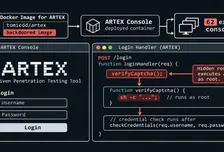
    CERT-In says a threat actor it tracks as Crafty Falcon is using public AI offensive tools (ARTEX, PentAGI, Cairn, CyberStrikeAI) to run autonomous attack chains against Indian BFSI and crypto targets. Separately, a copycat ARTEX Docker image with a hidden unauthenticated root shell was served from 62 consoles, and downloaded 9,000 times.

    Category
    AI-Enabled
  18. CensysResearch

    ARTEX: Agentic Asbestos (opens censys.com)

    Censys analysed ARTEX, an open-source LLM-driven autonomous penetration testing framework that CrowdStrike and Microsoft tied to attacks on South Korean finance and ConnectWise tenants. Censys counted 1,465 exposed ARTEX consoles, about 815 distinct deployments, 155 of them alongside other C2 or AI attack tools, and 32 open directories leaking attacker kits.

    Category
    AI-Enabled
    Attribution
    China, per Microsoft (confidence not stated); China, per CrowdStrike (medium confidence)
  19. Kaspersky SecurelistVendor report

    CyberStrikeAI attacks educational institutions (opens securelist.com)

    Kaspersky identified a campaign using CyberStrikeAI, an open-source framework where an LLM orchestrator on the C2 server plans actions and generates commands executed by a non-AI implant on compromised hosts. Attackers used it against education-sector victims in Africa and Latin America, automating post-exploitation stages including persistence, discovery, lateral movement and credential dumping.

    Category
    AI-Enabled

October 2026

  1. Trend MicroVendor report

    Not Only ARTEX: The Different Levels AI is Used in Attacks Targeting Japan (opens trendaisecurity.com)

    Trend Micro analyzed three attacker infrastructures targeting Japan that used AI at different levels: one ran a fully autonomous AI-agent penetration-testing platform called CyberStrikeAI coordinating 44 agents across reconnaissance, exploitation and exfiltration, another used an LLM to generate attack plans and bypass safety guardrails under human direction while also targeting AI/GPU infrastructure for hijacked

    Category
    AI-Enabled

    Also covered byThe Hacker News

February 2026

  1. Amazon Threat IntelligenceVendor report

    AI-augmented threat actor accesses FortiGate devices at scale (opens aws.amazon.com)

    A Russian-speaking financially motivated threat actor used multiple commercial generative AI services to plan attacks, generate exploitation scripts and reconnaissance tooling, and automate credential-based compromise of over 600 internet-exposed FortiGate devices across 55+ countries.

    Category
    AI-Enabled
    Actor
    Ed1s0nZ

    Also covered byTeam Cymru